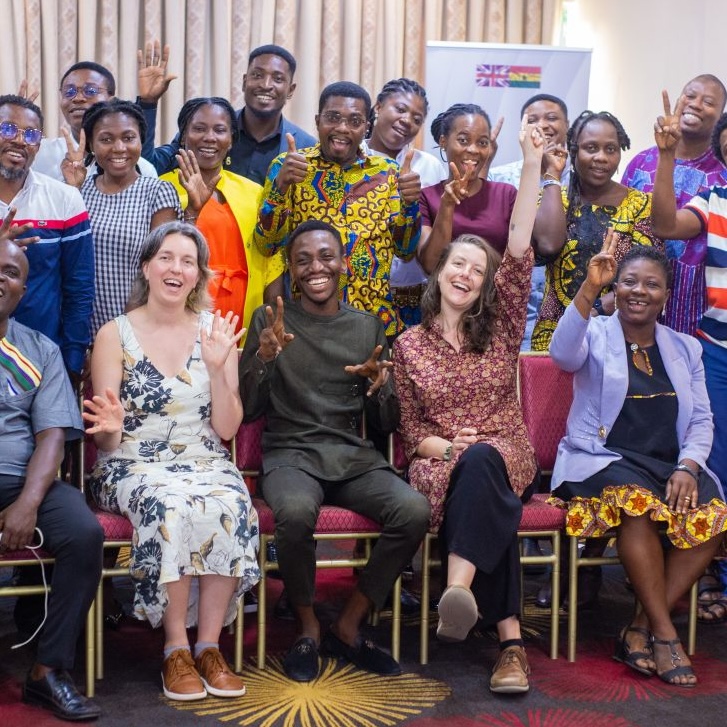
Halfway through a breakfast roundtable hosted in Nairobi by Grand Challenges Canada and Brink, one of the attendees asked a question that changed the direction of the conversation: How would we know when a market was genuinely ready for philanthropy to leave?
We had brought together funders, investors, entrepreneurs, scientists to talk about what it takes to move from proof to an investable market; and I had expected much of the conversation to be about capital: what kind was missing, how concessional it needed to be, and who might provide it.
Instead, the room kept returning to everything that has to happen before investment can do its job.
"From aid to investment" is an ambition almost everyone in global health has signed up to. The direction makes complete sense when development budgets are shrinking, funders want proven solutions taken off grant life support, and governments and investors are looking for models that can pay for themselves and reach more people.
The trouble is, the neat, three-part story we tend to tell about how it happens: philanthropy proves the thing works, investors turn up to scale it, and then government eventually picks up the bill.
That story came apart fairly quickly in Nairobi.
Between a model that works and a market that funds it sits a long, awkward, badly funded stretch of work. Demand has to become predictable enough for someone to plan on it, procurement systems have to be capable of buying the thing, and organisations often need new capabilities and sometimes a new legal structure altogether. Then regulators have to catch up, investors need information they can actually underwrite, and the capital has to arrive in the right form, in the right order.
But nobody owns that work, because it is not anybody's mandate, does not sit in anybody's budget line, and fits neither a grant cycle nor an investment thesis.
The ‘Missing Middle’ is usually described as a shortage of capital, though to the people in that room it looked much more like a shortage of ownership.
Medical oxygen is about as clear a test case for this as you will find.
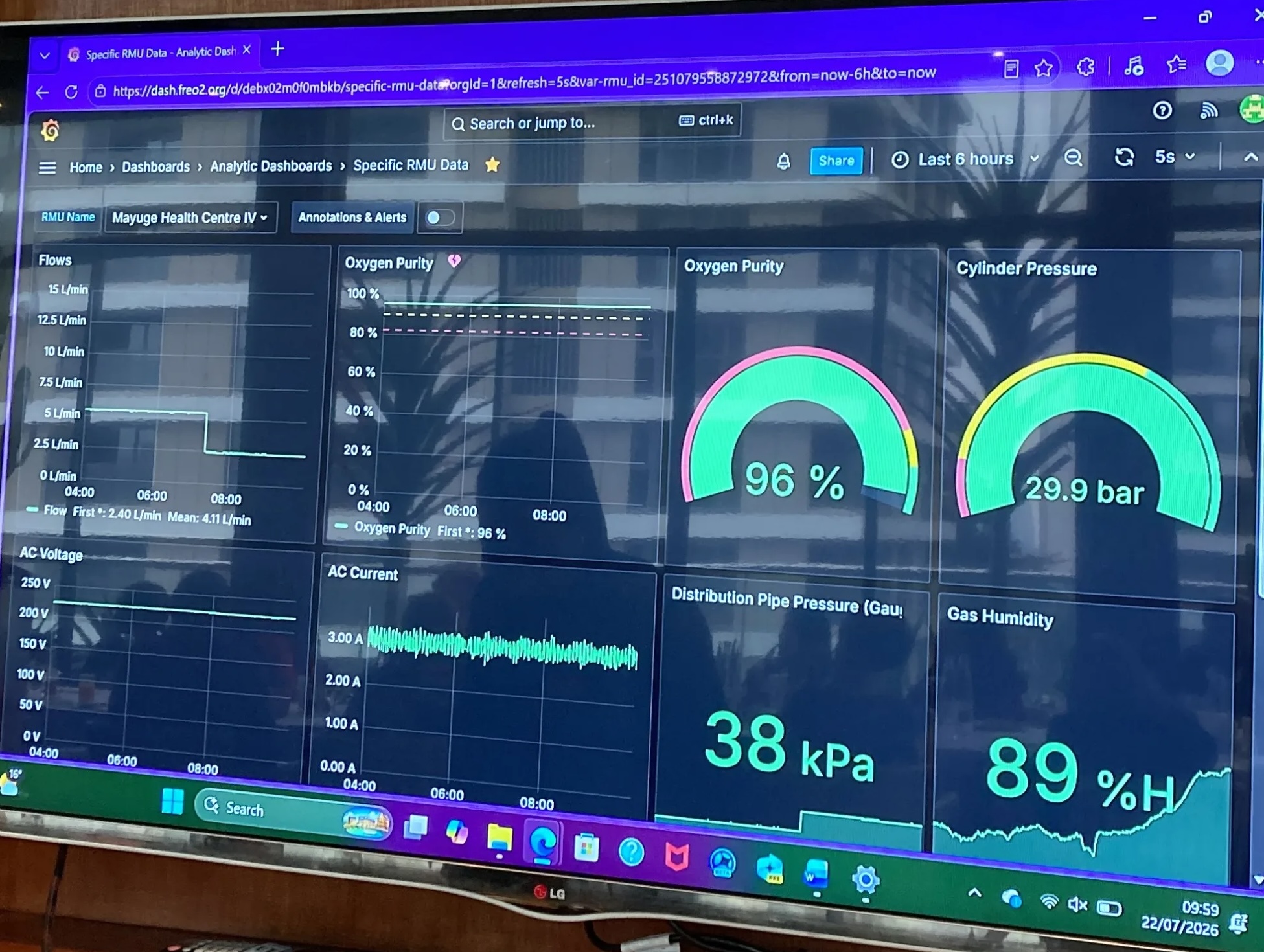
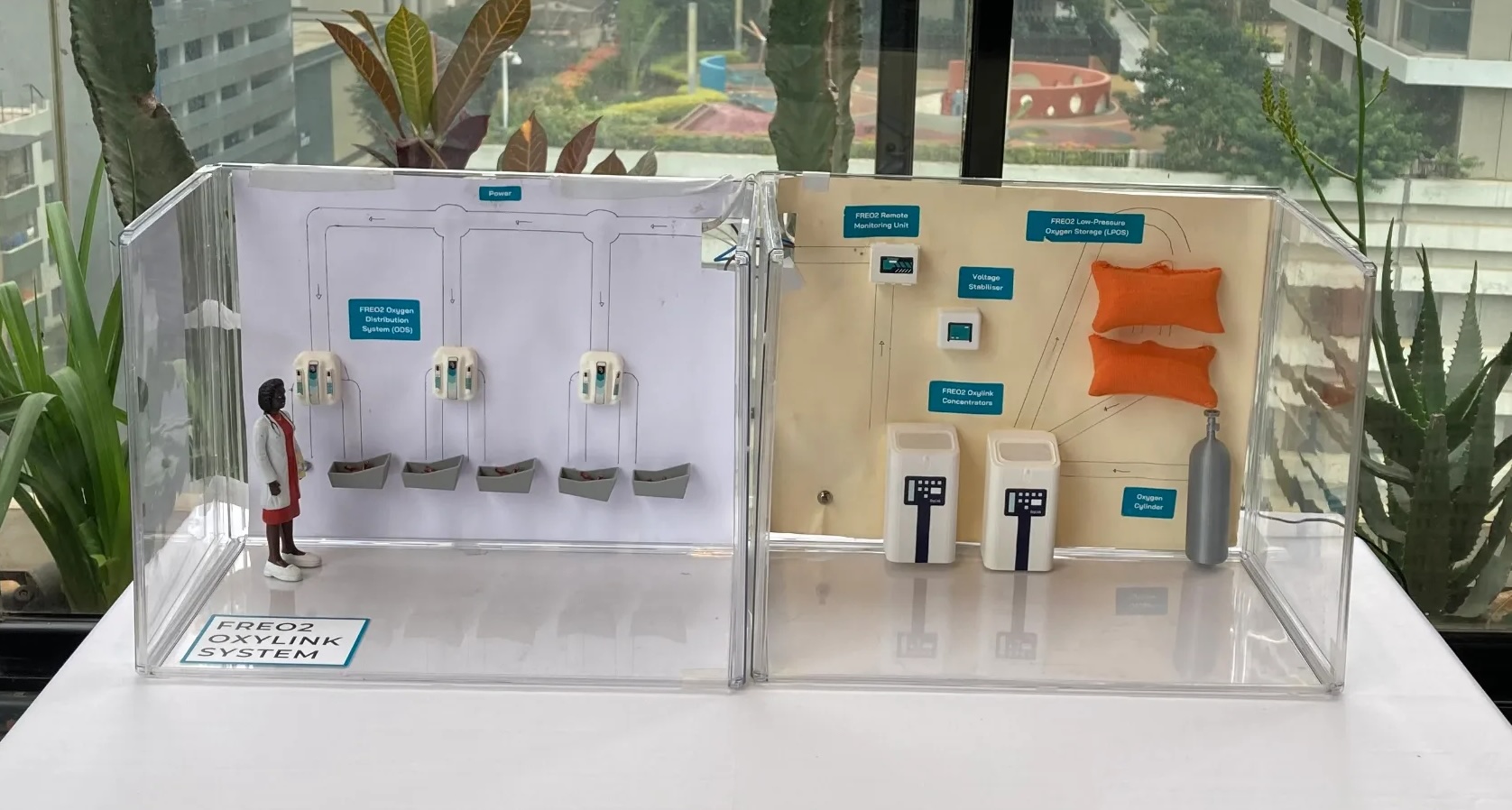
During COVID, money poured into the provision of medical oxygen, so most of what you would put on a requirements list (plants, cylinders, concentrators, hospital wiring) now exists. Yet oxygen still does not reliably reach the patient who needs it at their bedside at two in the morning. Why?
Because production was never really the sole problem. Even when production is ‘solved’ someone still has to move the gas, fix the machines when they break, keep them running through a power cut, train the staff who use them, and answer for it when the service fails.
For the past six years, through the Oxygen CoLab, my colleagues and I have worked alongside local operators, governments and funders trying to understand just why these kinds of delivery models stall. We began by asking whether the models could work. Over time, the more difficult question became impossible to ignore: if the evidence is there and the demand is there, why do these models fail to scale?
That is why I have come to see oxygen as more than one neglected health market. It is a microcosm of the shift we are all working through: from proven models to functioning markets.
Looking across the businesses and health systems we have worked with, five patterns have come up often enough that I no longer think of them as isolated barriers. Together, they describe the transition that nobody currently owns.
Researchers compared oxygen concentrators on similar hospital wards, where under standard procurement the machines worked only 25% of the time, versus 95% when a local company was on the hook for keeping them running. The machines and the wards were the same, so that 70-point gap comes down entirely to who was responsible for keeping them working.
Evidence exists, but it does not travel on its own from a journal onto a hospital ward. There is no mechanism that converts "this works" into "this is how the system now operates".
When a small operator struggles to grow, the easy conclusion is that there is no market, when often the business is stalling short of commercial traction because it cannot reach the capital that would take it there.
HealthPort, one of the operators we have supported through the CoLab, grew its hospital revenue sixfold in three years and now has a waiting list of facilities. They showed that the demand was always there, but the working capital was not. The danger is that the stall becomes self-reinforcing. Investors see a company that has not yet achieved scale and conclude that no market exists. The company is denied the finance it needs to grow, remains small, and appears to confirm the original judgement.
Billions have gone into plants, concentrators, cylinders and hospital infrastructure, but a concentrator sitting on a ward stays an asset rather than a service until someone finances uptime, maintenance and accountability, and that part rarely has a funder.
Anyone working in medical equipment or health system delivery will recognise the shape of it: the purchase was justified, the placement was sensible, and the thing still is not delivering the service it’s bought to provide. The question is therefore not only how we finance the next innovation, but rather how we prevent the value of past investment from leaking away.
Scaling capital comes in ticket sizes too large for a small operator to absorb, or as short-term grants that fund activity without funding a route to sustainability, or as loans wanting collateral a young company does not have.
You can see the consequence in who gets served: eight in ten of the oxygen businesses we mapped sell to private hospitals, while the public facilities where the need is greatest go underserved. That is rarely about mission, since financing terms, payment risk and procurement rules push operators towards customers who pay reliably. So the shape of the capital ends up deciding which patients a business can afford to reach.
In Nigeria, an imported pharmaceutical clears customs at 0% duty while the steel cylinder that carries the oxygen attracts a tariff of 60%. Nobody sat down and designed that; it is a hangover from when cylinders were treated as industrial kit. Fix the financing, leave the tariff in place, and the numbers still do not work.
The same goes for regulators able to licence small businesses, procurement systems that can buy a service rather than a box, and payment terms an operator can survive on, because a capital stack is only as good as the environment it lands in.
These five patterns point to one diagnosis. The gap between proof and scale is often described as a shortage of finance, but finance is only one part of it. The deeper problem is that nobody owns the work of turning a proven model into something that governments can procure, operators can sustainably deliver and investors can confidently finance.
That was where the Nairobi discussion moved. The question was no longer simply “what combination of grants, debt and guarantees do we need?”. It became: “who funds the conditions that make investment possible?”.
Three ideas emerged:
The instinct is to prove a model works and then hand it on. That leaves the hardest part, the stretch between proof and market, treated as technical assistance attached to a grant. It is a phase in its own right, and it has to be funded like one: with its own objectives, timeline and measures, from validating recurring demand and opening procurement pathways to clearing regulatory blockers and producing information a lender can actually use.
Two disciplines are needed to make sure this happens. First, design backwards from whoever ultimately pays, from which budget and through which mechanism, so the route to demand shapes the model from day one rather than government being invited in once the product, the organisation and the financing are already fixed. And decide in advance what would let you leave, so the sector can tell a market that is genuinely ready from one that funders have simply tired of. Philanthropy should not be there forever, but stepping back well means knowing what has to be left standing when you go.
Owning the transition does not mean one funder has to do everything. Different philanthropies are equipped to play different roles: one may build the evidence and rigour behind a model; another fund the less visible work of changing regulation, procurement or policy; another convene governments, operators and investors; and another strengthen organisations or absorb early risk. The challenge is to organise those contributions around a shared transition rather than a collection of disconnected grants.
That also means moving beyond isolated projects. Too often, each grant produces its own pilot, evidence and lessons, only for the next project to begin again. The work needs to stack just as the capital does: each intervention should remove a defined barrier, build on what came before and leave the market better prepared for what comes next.
Different money does different jobs. Grants pay for public goods, early experimentation and risks no investor can reasonably price. Guarantees get lenders into markets they would otherwise avoid, and concessional debt funds assets and working capital while the risk is still unclear. Equity suits businesses with the governance and growth potential to use it well.
The point is to stop blending indefinitely and start defining what each layer buys, which milestone lets the next layer in, and which activities will always need non-commercial funding, so that the stack moves capital along instead of holding it in place.
Taking on debt or investment often calls for different governance, different financial capability and different incentives from those a grant-funded organisation was built around, and none of that is solved by registering a new company. But the shape of the answer belongs to the organisation, not to whoever is writing the cheque. Make "become investable" a precondition and you simply move the difficulty onto the grantee, rewarding whoever can perform the right structure over whoever runs the best service. And the strain is not only technical: for a leader whose organisation is defined by not chasing profit, being told to "become investable" is an identity question before it is a financial one.
The more useful role is to widen the choice and then help carry it. Help leaders weigh the options honestly, stay a nonprofit, spin out a commercial subsidiary, go hybrid, license the intellectual property, or separate the revenue-generating services from the parts that remain public goods, and treat a decision not to commercialise as a legitimate answer rather than a failed one.
The Nairobi conversation did not produce a finished capital stack for medical oxygen. But what it did produce was a much clearer picture of the problem that stack has to solve. Rhetoric will not get us from aid to investment, and financial engineering will not do it alone. It takes institutions prepared to work across the lines between enterprise, government, philanthropy and investment, funders willing to back the market as well as the businesses inside it, and an honest reckoning with how long that work takes.
Oxygen is a reasonable place to start, with the evidence settled and the constraints concrete enough to work on. If we cannot build a functioning market around something this fundamental, after all the evidence generated and all the infrastructure already paid for, it is worth asking whether we understand scale at all.
But if we can answer that for oxygen, we may have something useful well beyond it: a role for philanthropy, not as the permanent owner of a market, but as the temporary steward of the transition that makes one possible.
If you'd like to speak to Alex about this challenge, you can email her at alex@hellobrink.co